Ranking Issues
Top 15 Google Business Profile Ranking Factors (2026)
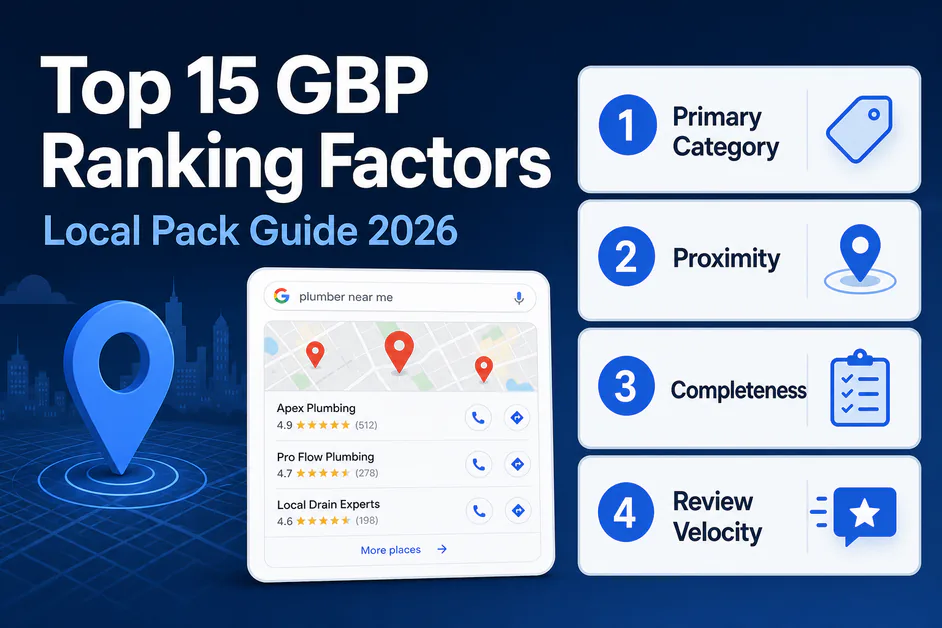
Table of contents expand_more
Two plumbers on the same street. Same star rating. One owns the map pack—the other barely shows up. The difference is rarely “secret sauce.” It is how well each listing matches the google business profile ranking factors Google uses for relevance, distance, and prominence.
If you manage client Maps visibility, you need a clear shortlist of GBP ranking signals—not another vague “post more” tip. This guide walks you through exactly the top 15 factors that shape local pack ranking factors in 2026, and how to act on them.
Quick Answer: The most important google business profile ranking factors in 2026 still cluster around primary category, proximity, profile completeness, review velocity, photos, hours accuracy, and engagement. Google does not publish official weights, but practitioner surveys and audit work consistently put GBP signals near one-third of local pack influence. Fix category and NAP first, then reviews, media, and activity—and re-measure with Maps keyword tracking.
What are google business profile ranking factors?
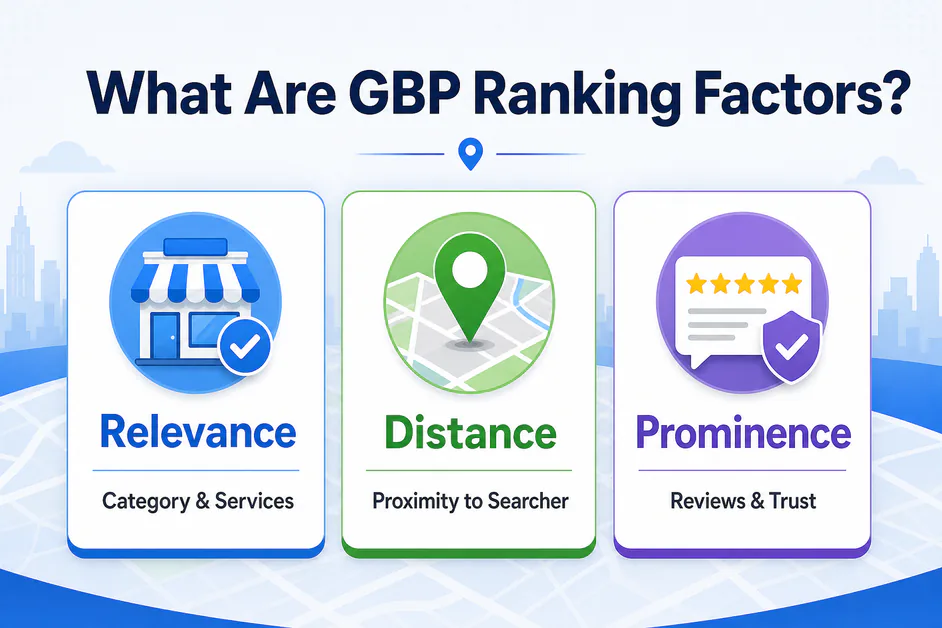
Google business profile ranking factors are the on-profile and nearby signals Google weighs when choosing which listings appear for a local query. Classic local SEO still frames them as relevance, distance, and prominence—how well you match the search, how close you are, and how trusted you look.
These are not the same as organic blue-link SEO alone. A strong website helps, but the map pack leans hard on listing quality. For diagnosis when rankings slip, see Google Business Profile not ranking. To score the listing itself, use a structured google business profile audit.
Top 15 google business profile ranking factors in 2026
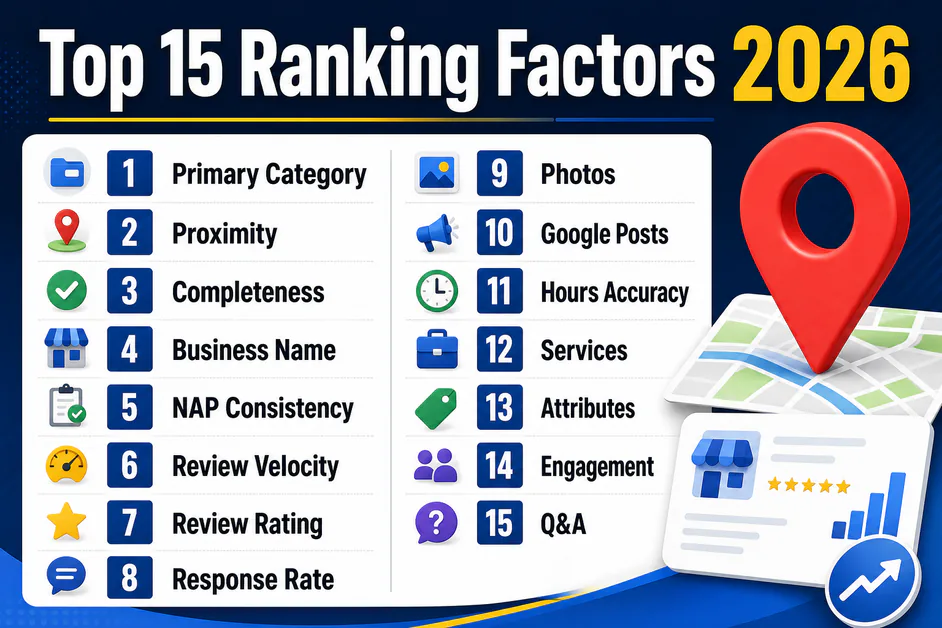
Here are the top 15 google business profile ranking factors agencies and freelancers should review in 2026. Order reflects practical impact from audit work and published local SEO research—not a claim of Google’s secret formula.
1. Primary category
Still the strongest eligibility lever. “Plumber” vs “Contractor” changes which queries you can even compete for.
2. Proximity to the searcher
Distance is a core Google Maps ranking factor. You cannot fake being nearby—but you can set a realistic service area and pin.
3. Profile completeness
Filled services, attributes, description, hours, and media beat half-empty listings that look abandoned.
4. Accurate business name
Match real-world branding. Keyword-stuffed names risk trust and policy issues without lasting local SEO ranking factors wins.
5. NAP consistency
Name, address, and phone should match the website and major citations. Small format mismatches still confuse prominence signals.
6. Review velocity (recent reviews)
Fresh reviews often matter more than a huge stale pile. Cadence in the last 30–90 days is a major GBP ranking signal.
7. Review rating and count
Total volume and average stars still support prominence—especially when competitors are close on category and distance.
8. Review response rate
Owner replies show the business is active and customer-aware. Aim to answer positives and negatives promptly.
9. Photos and video freshness
Quantity helps; recency helps more. Exterior, interior, team, and work-in-progress images strengthen relevance.
10. Google Posts activity
Regular posts signal an alive listing. Offers, updates, and seasonal notes beat a silent profile.
11. Hours accuracy and “open now”
Wrong hours cost conversions and can weaken visibility when searchers want businesses open now.
12. Services and products
Predefined and clear custom services expand query matching beyond the category alone.
13. Attributes
Payments, accessibility, amenities, and identity attributes help Google and users filter matches.
14. Engagement actions
Calls, direction requests, website clicks, and messages are behavioral GBP ranking signals that reflect real demand.
15. Q&A and on-profile engagement
Seeded, accurate Q&A plus ongoing answers keep the listing useful—and reduce bad public answers from strangers.
| Factor group | Examples from the top 15 | Fix priority |
|---|---|---|
| Relevance | Primary category, services, attributes, name accuracy | Critical first |
| Distance | Proximity, pin, service area setup | Critical (structural) |
| Prominence | Reviews, responses, photos, posts, engagement, Q&A | High ongoing |
Industry surveys (including widely cited local search ranking factor reports) often estimate GBP-side influence around one-third of local pack weight—useful context, not a guarantee. Always verify strategy against your market.
Which local pack ranking factors matter most?
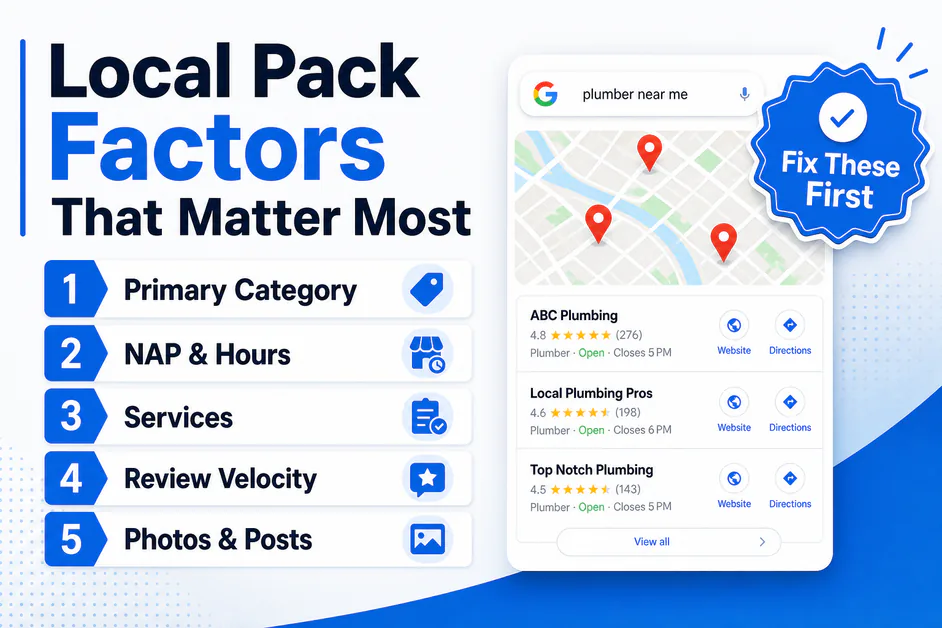
If you can only touch five local pack ranking factors this week, start here:
- Primary category fit
- NAP + hours accuracy
- Services completeness
- Review velocity + response workflow
- Photo and post freshness
Proximity is huge but not “optimizable” like a title tag—respect geography, then out-execute competitors on completeness and activity. For a field checklist, use our Google Business Profile optimization checklist.
How do Google Maps ranking factors differ from organic SEO?
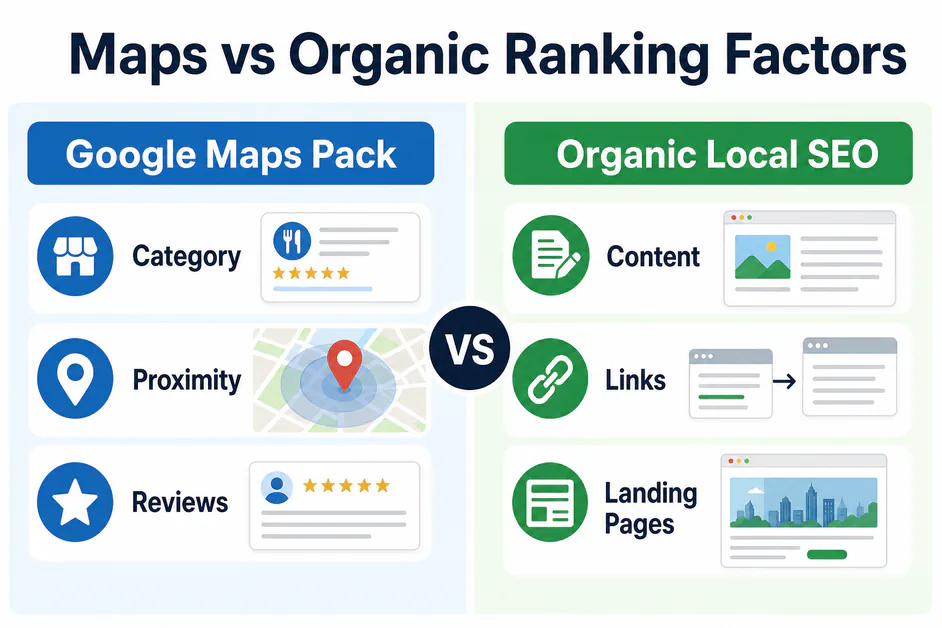
Google Maps ranking factors lean on the listing: category, distance, reviews, and profile activity. Organic local results lean more on on-page content, links, and site experience—though citations and NAP still bridge both worlds.
That is why a gorgeous website with a thin GBP often loses the pack, and why a complete listing with weak landing-page alignment can still underperform on clicks. Balance both. Compare tooling in our guide to the best Google Business Profile audit tools.
How can you improve google business profile ranking factors?
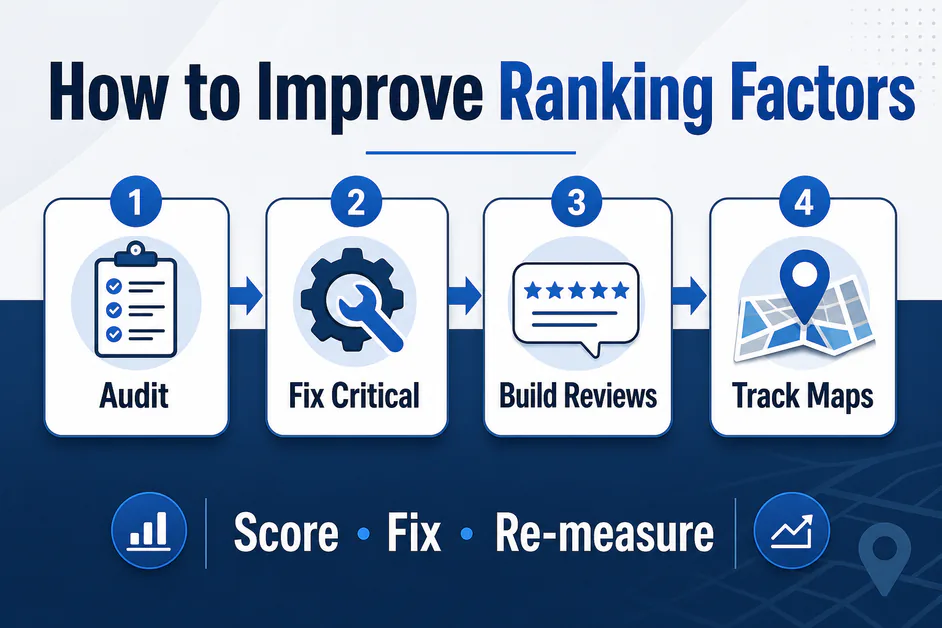
Improving google business profile ranking factors is a process:
- Run a full listing audit and score each factor group
- Fix critical relevance issues before vanity edits
- Build a monthly review + photo + posts rhythm
- Track Maps keywords so you know which GBP ranking signals moved
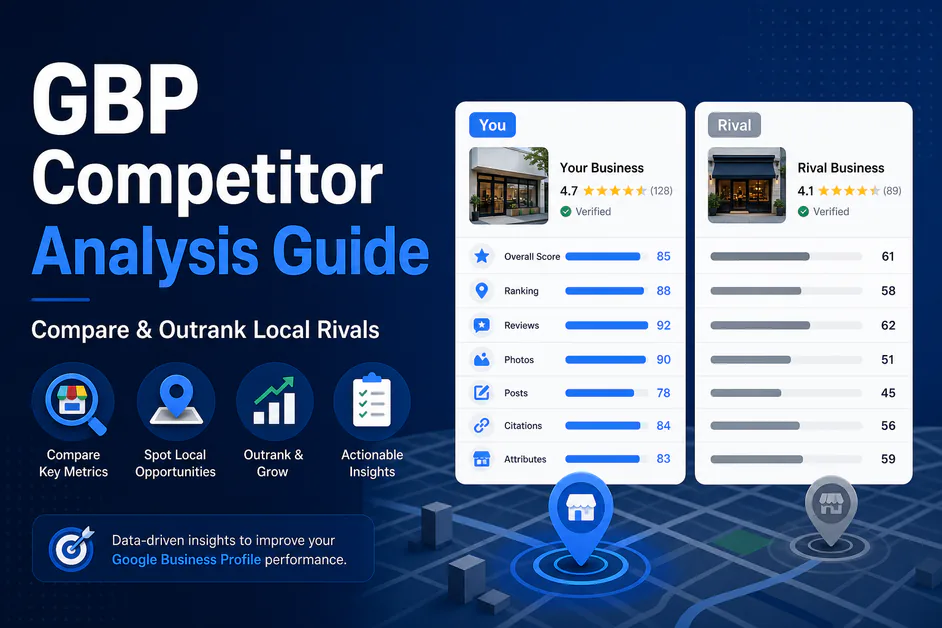
- Benchmark competitors on the same local pack ranking factors
PinAudit helps teams automate the audit score, track Maps positions on paid plans, and compare competitors on Pro and Agency—so local SEO ranking factors become a reportable system, not a hunch. Explore features, pricing, or how PinAudit works.
AI Quick Answer: Google business profile ranking factors in 2026 center on primary category, proximity, completeness, review velocity, photos, hours, services, attributes, and engagement. These GBP ranking signals shape local pack and Google Maps ranking factors more than one-off website tweaks. PinAudit helps SEO professionals audit listings, prioritize fixes, and track whether those local SEO ranking factors improve over time.
Frequently asked questions
What are Google Business Profile ranking factors?
Google business profile ranking factors are the on-profile and nearby signals Google weighs when choosing which listings appear for a local query. Classic local SEO frames them as relevance, distance, and prominence—how well you match the search, how close you are, and how trusted you look.
Which local pack ranking factors matter most?
If you can only touch five local pack ranking factors this week, start with primary category fit, NAP and hours accuracy, services completeness, review velocity plus responses, and photo and post freshness. Proximity is huge but not optimizable like a title tag.
How do Google Maps ranking factors differ from organic SEO?
Google Maps ranking factors lean on the listing: category, distance, reviews, and profile activity. Organic local results lean more on on-page content, links, and site experience—though citations and NAP still bridge both worlds.
How can you improve Google Business Profile ranking factors?
Run a full listing audit, fix critical relevance issues before vanity edits, build a monthly review and photo and posts rhythm, track Maps keywords, and benchmark competitors on the same factors. Re-score the same 15 factors 30 days after changes.
Which Google Business Profile ranking factor matters most in 2026?
Primary category is still the strongest eligibility lever—it decides which local queries you can compete for. Practitioner surveys often put GBP-side influence around one-third of local pack weight, so fix category and NAP before softer assets.
Final thoughts
You do not need fifty tactics. You need disciplined focus on the google business profile ranking factors that decide eligibility, distance fit, and trust. Work the top 15 as a living scorecard, fix the critical five first, and measure Maps movement. That is how agencies turn local SEO ranking factors into client results.
PinAudit — Google Business Profile audit software for freelancers, consultants, and agencies.
Email: support@pinaudit.com
Web: pinaudit.com · App: app.pinaudit.com
Contact the PinAudit team · Start a free audit
Tags: google business profile ranking factors · local pack ranking factors · GBP ranking signals · Google Maps ranking factors · local SEO ranking factors